

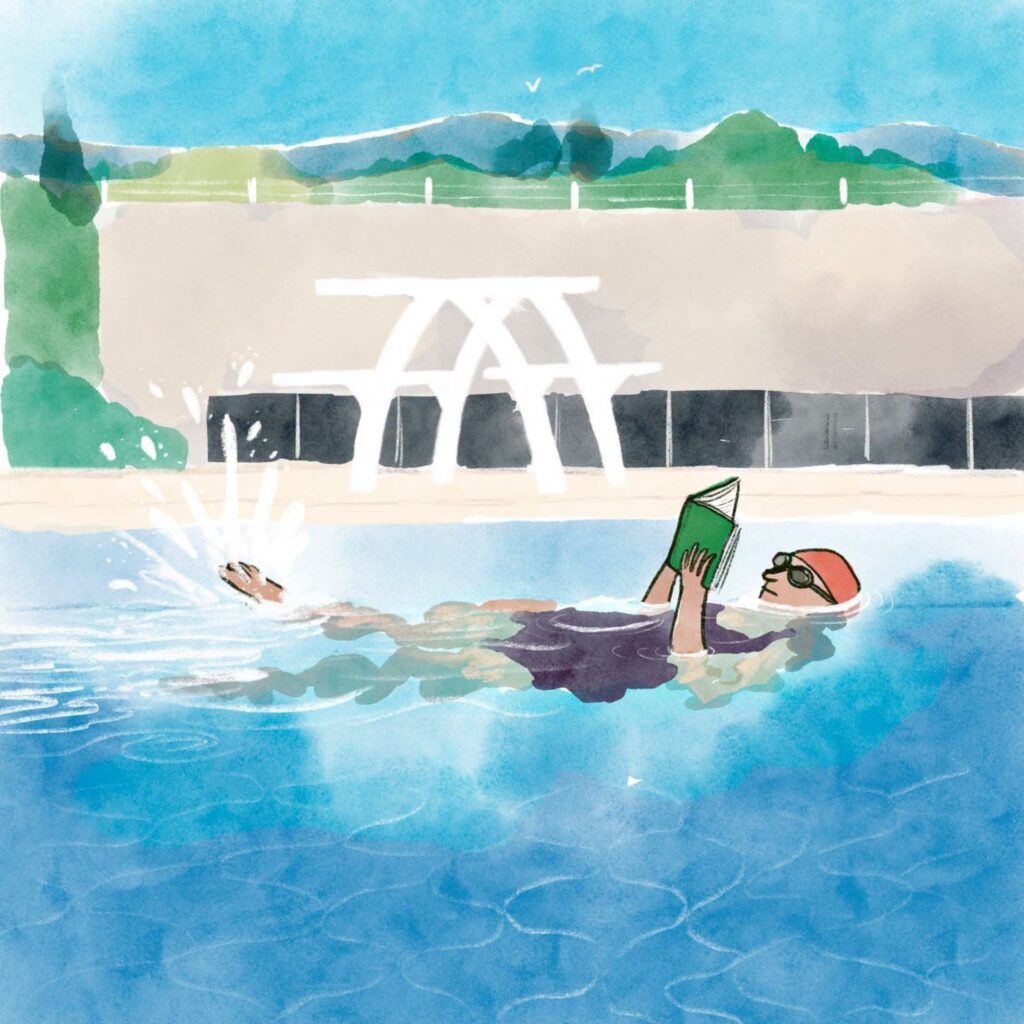
Stroud’s lido is not a luxury. It is not a relic. And it is certainly not a leisure subsidy that cash-strapped councils can quietly set aside when budgets get tight. It is a public health investment and it is time it was recognised and funded as one.
Across the country, the conversation about lidos is changing. A landmark new Fabian Society paper, The People’s Pools, published in June 2026, makes the case powerfully: Britain’s outdoor pools were never just about swimming. They were built in the 1930s on a clear and unapologetic principle that working people, their children, and their elderly parents had as much right to clean water, fresh air, and healthy exercise as the wealthy elite. That principle is as relevant today as it was then.
A decision for the new Gloucestershire unitary authority
Stroud District Council is a legacy body in its final months. The decisions that will shape the lido’s long-term future will fall to the new county-wide unitary authority coming into being next year. That is precisely why the case must be made now, clearly and compellingly, so that the incoming authority inherits not just the asset, but a clear framework for treating it as what it truly is: a preventative health facility with a crucial role to play in Gloucestershire’s public health strategy.
The new unitary authority will face the same pressures bearing down on every council in England, with an ever-greater share of budgets consumed by statutory social care. The only sustainable answer is investment in prevention. Outdoor swimming facilities like Stroud lido are exactly that kind of investment, reducing demand on health and social care services before people reach crisis point. The new authority should be making that case to Integrated Care Boards and to central government from day one.
From illness intervention to prevention
The NHS is under enormous pressure. Everyone agrees that the answer lies, at least in part, in shifting from an illness intervention model toward prevention, keeping people healthier for longer and reducing demand on GPs, hospitals, and social care before it reaches crisis point. That is now national health policy. The question is: what does it look like on the ground, in our communities?
Regular swimming is one of the most effective and accessible forms of low-impact exercise available. It builds cardiovascular fitness, supports mental health, maintains mobility, and reduces the risk of chronic conditions including obesity, diabetes, and depression. For children, it builds confidence, water safety skills, and healthy habits that last a lifetime. For older residents, it offers gentle, joint-friendly exercise that supports independence and quality of life well into old age. This is not a subsidy. It is a return on investment.
The Fabian Society report notes that visits to lidos and outdoor swim facilities rose by 30 per cent in a single year between 2024 and 2025, with over half a million visits to outdoor pools alone in the summer of 2025. Demand is not the problem. Access is.
The climate crisis and the rise of wild swimming
There is a powerful and growing force driving people back to outdoor water: the climate crisis itself. Longer, hotter summers are pushing more and more people, especially younger generations, toward rivers, lakes, and reservoirs in search of relief. Wild swimming has surged in popularity across all ages and backgrounds. It is a natural, instinctive response to a warming world.
But rivers and lakes carry serious risks. Cold water shock can claim the lives of confident swimmers and novices alike. Closing the lido has meant that people are looking toward the Frome and the Severn. As Labour councillors have already argued, and as the Fabian Society paper specifically references in the context of Stroud, forcing people who lack cold water swimming experience into unregulated open water on a hot summer’s day was a deeply troubling and entirely predictable outcome of closing a supervised, safe facility.
A lido does not compete with wild swimming. It complements it, providing a safe, managed environment where children and adults can build the skills and cold water confidence they need to enjoy open water safely. As the climate changes, that role becomes more important, not less.
For everyone, not just the comfortable
It is sometimes assumed that outdoor swimming is a middle-class pursuit, the preserve of those with the time, money, and confidence to seek it out. The reality at Stroud lido tells a different story. This is a facility that serves working families who cannot afford gym memberships or private lessons. It serves teenagers with nowhere else to go on a summer afternoon. It serves older residents on fixed incomes for whom it represents their only realistic access to regular exercise.
When the lido closes, it is not those families who find an alternative. They simply go without. The inequality of access to outdoor swimming is stark and it is growing. Every child in Gloucestershire, regardless of their postcode or their parents’ income, should be able to swim safely and confidently. That is not an aspiration. It should be a guarantee.
The last decade of life
There is a growing body of evidence that the quality of our final years is shaped significantly by the lifestyle choices and physical activity we maintain in our fifties and sixties. A community with access to affordable outdoor swimming ages better, with lower rates of falls, cognitive decline, isolation, and dependency. That means less pressure on social care budgets. It means people living independently for longer. It means families under less strain. The economics, as well as the humanity, are overwhelming.
An investment, not a subsidy
Whether the lido’s future lies with a community trust, a partnership model, or direct public management under the new unitary authority, the following must be non-negotiable: it stays open, it stays accessible to all, and it is recognised formally as a public health investment aligned with the national prevention policy.
The new Gloucestershire unitary authority should be making that case to Integrated Care Boards, to the NHS, and to central government from the moment it comes into existence. Not treating the lido as a discretionary leisure cost it cannot afford, but as preventative health infrastructure it cannot afford to lose.
The Fabian Society’s People’s Pools framework, which proposes using the forthcoming Water Reform Bill to bring water companies into the funding and delivery of lido provision nationally, offers an additional route worth pursuing urgently.
The water is waiting. Booking are open from tomorrow!